Artificial Pelago
Year: 2026
Exhibition: Sculpting Time, group exhibition, Marsio, Aalto University, Espoo
Material: 3D-printed PETG
Size: H 800 x W 1800 x D 1050 mm
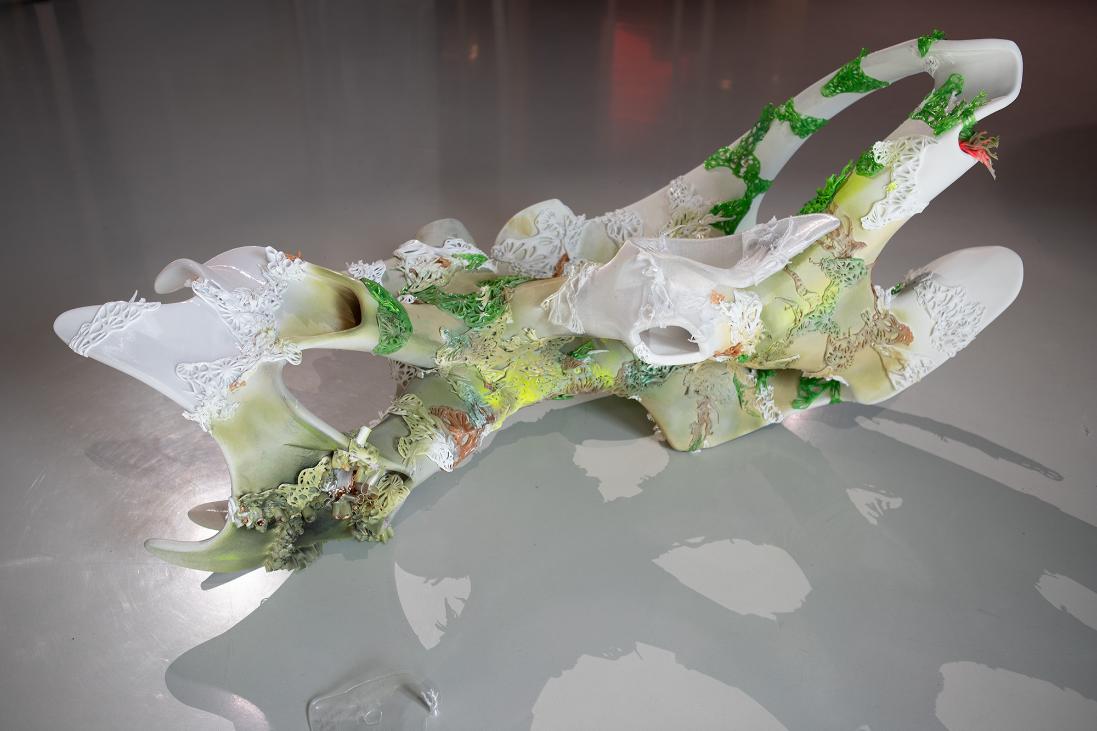
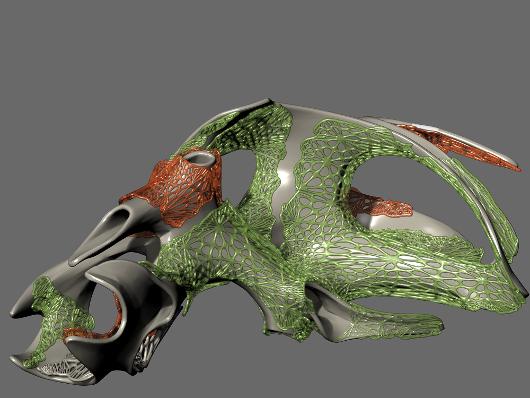
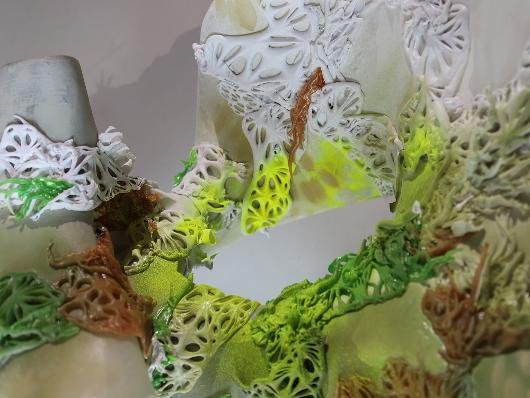
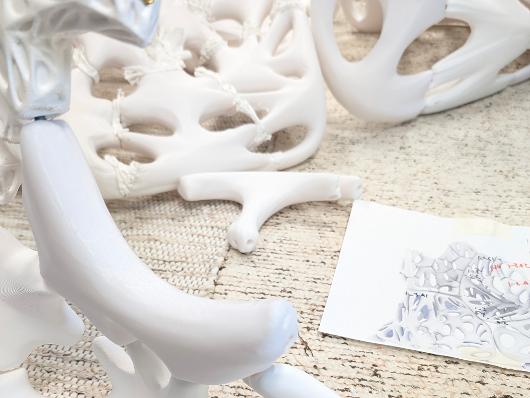
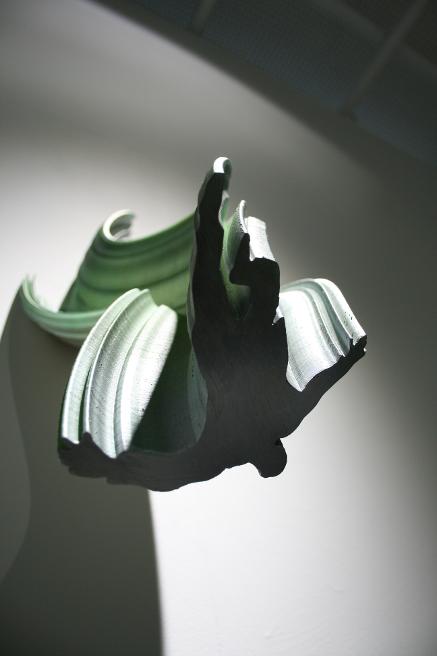
The sculpture Artificial Pelago is 3D-printed from PETG, a plastic derived from petroleum and a close relative of the plastic used in beverage bottles. The universe is full of rock, metals and stars, but materials created by living organisms, such as wood and oil, might exist only on Earth. This makes petroleum one of the rarest materials in the cosmos. It formed roughly 200–300 million years ago from ancient marine organisms, such as plankton, compressed under immense pressure on the seabed.
With this artwork, I wanted to build a bridge between ancient biological history and contemporary digital fabrication. It is also a reflection on the overconsumption of our era. We have built our entire modern society on oil while depleting the Earth’s reserves of this millions-of-years-old material. Petroleum and plastic have been reduced to something mundane, even despised. We have forgotten to feel gratitude for this unique biological and material heritage.
Bleaching
Year: 2025
Exhibition: solo exhibition, Gallery Katariina, Helsinki
Material: 3D-printed porcelain
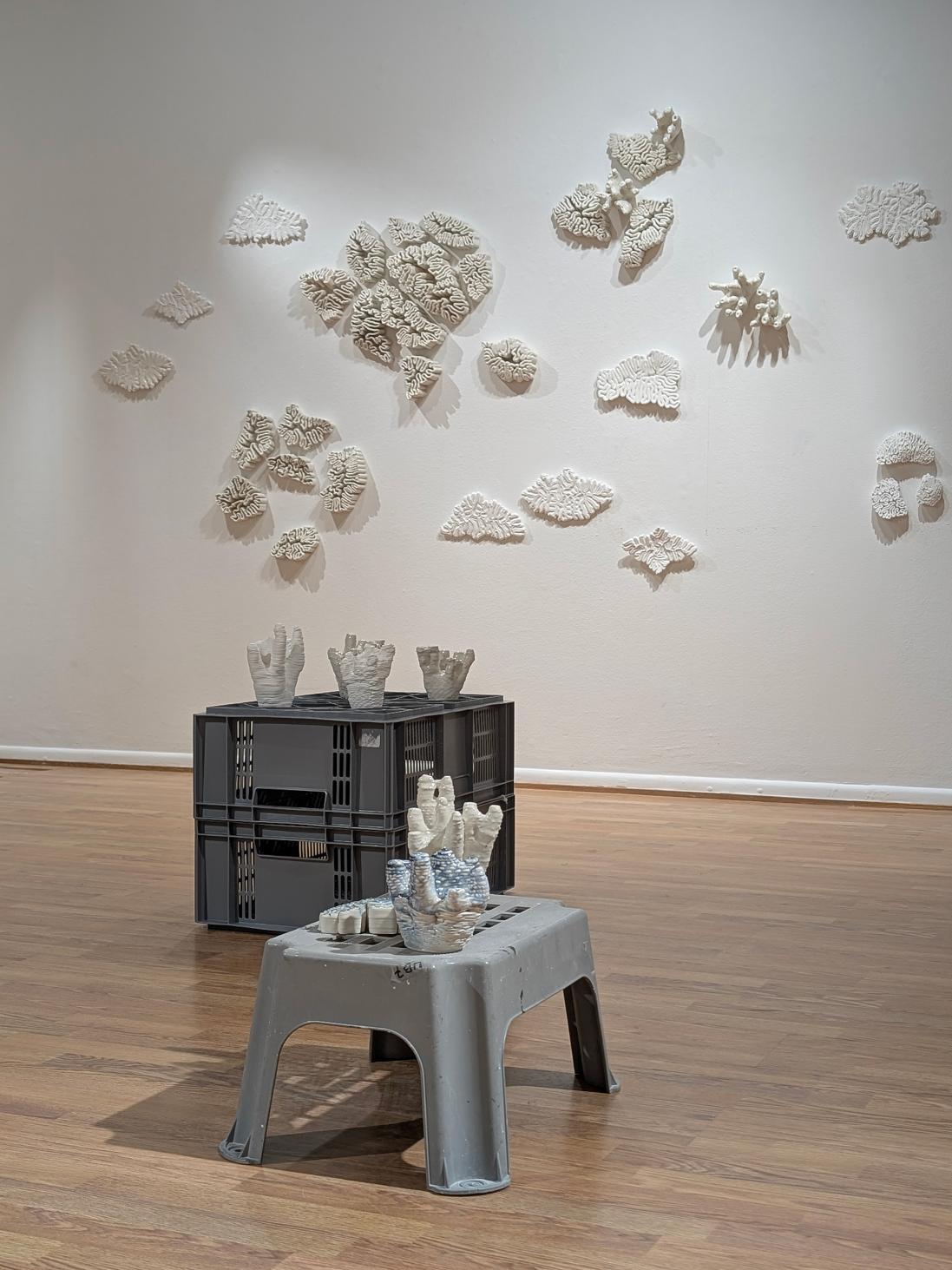
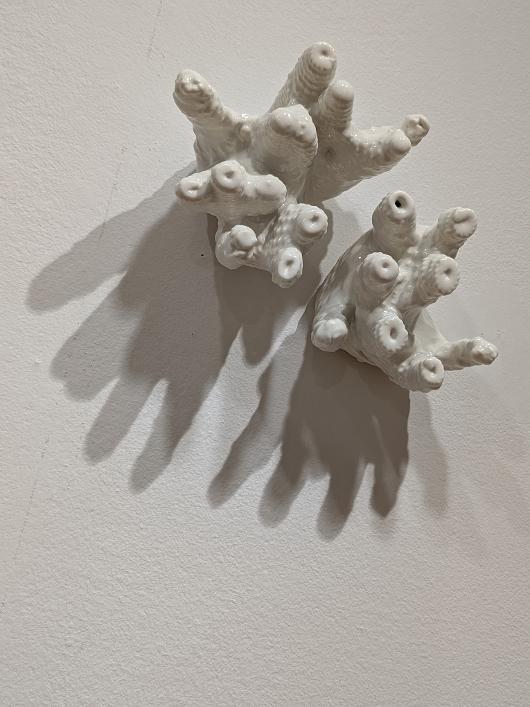
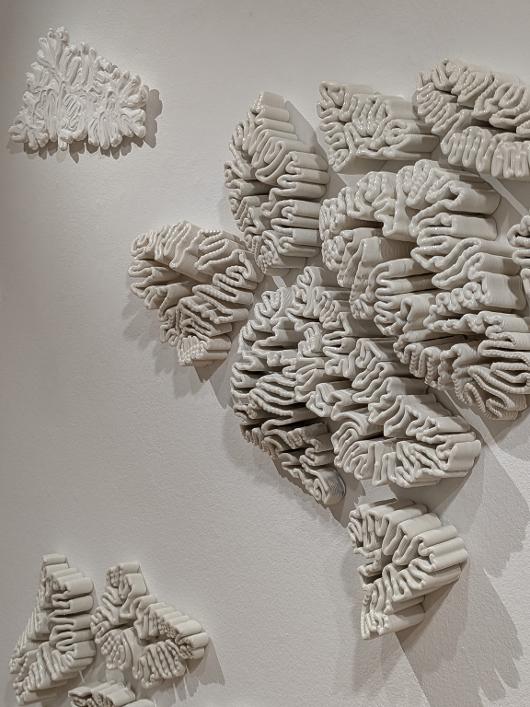
The skull has long been an enduring symbol of death in art. For me, its equivalent is coral that has lost its colour: a metaphor for the dying of marine species in the wake of environmental catastrophe. I have made these works in 3D-printed porcelain, whose translucent white evokes a lifeless seabed and the stark reality of coral bleaching.
Today, 3D-printed coral structures are used to create new habitats and restore damaged reefs, perhaps already too late. An artificial reef could help species survive while we work to slow climate change. In my process, I use growth algorithms that mimic organic forms, the same kinds of algorithms used in design, architecture and urban planning.
Juurikka (Root Stump)
Year: 2025
Exhibition: Truth or Fairy Tale?, Birch Alley Biennial, Iisalmi
Material: 3D-printed PLA and laser-cut plywood
Size: H 1800 × W 2000 × D 2000 mm
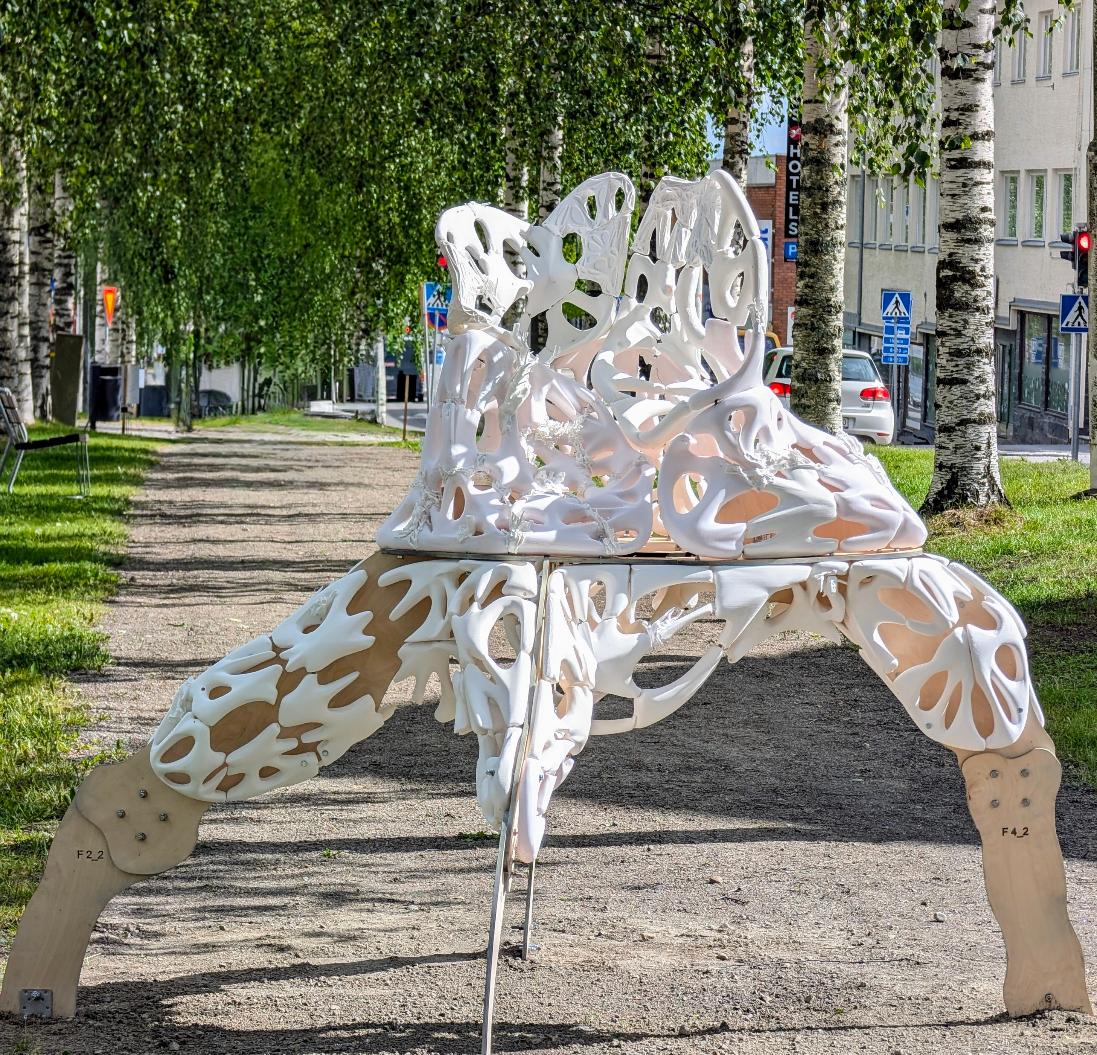
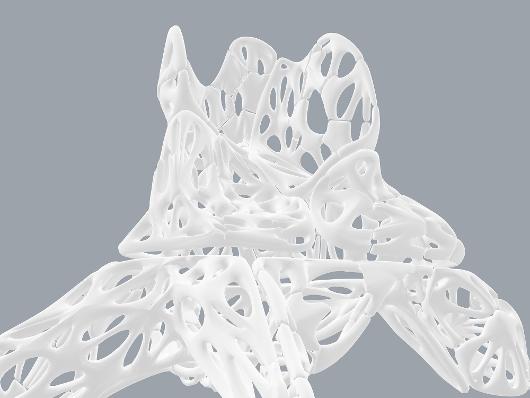
My ancestral roots trace back to the countryside of Iisalmi. In my relationship with my own history there are discontinuities, and they appear as fractures within the sculpture. The work was built from hundreds of individual sections 3D-printed in plant-based PLA, combined with laser-cut plywood. Its formal language joins elements of everyday life with organic, mathematical models.
Hauru – Underwater Bladderwrack Forest
Year: 2024
Exhibition: Under the Surface, group exhibition, Gallery Arka, Vilnius, Lithuania
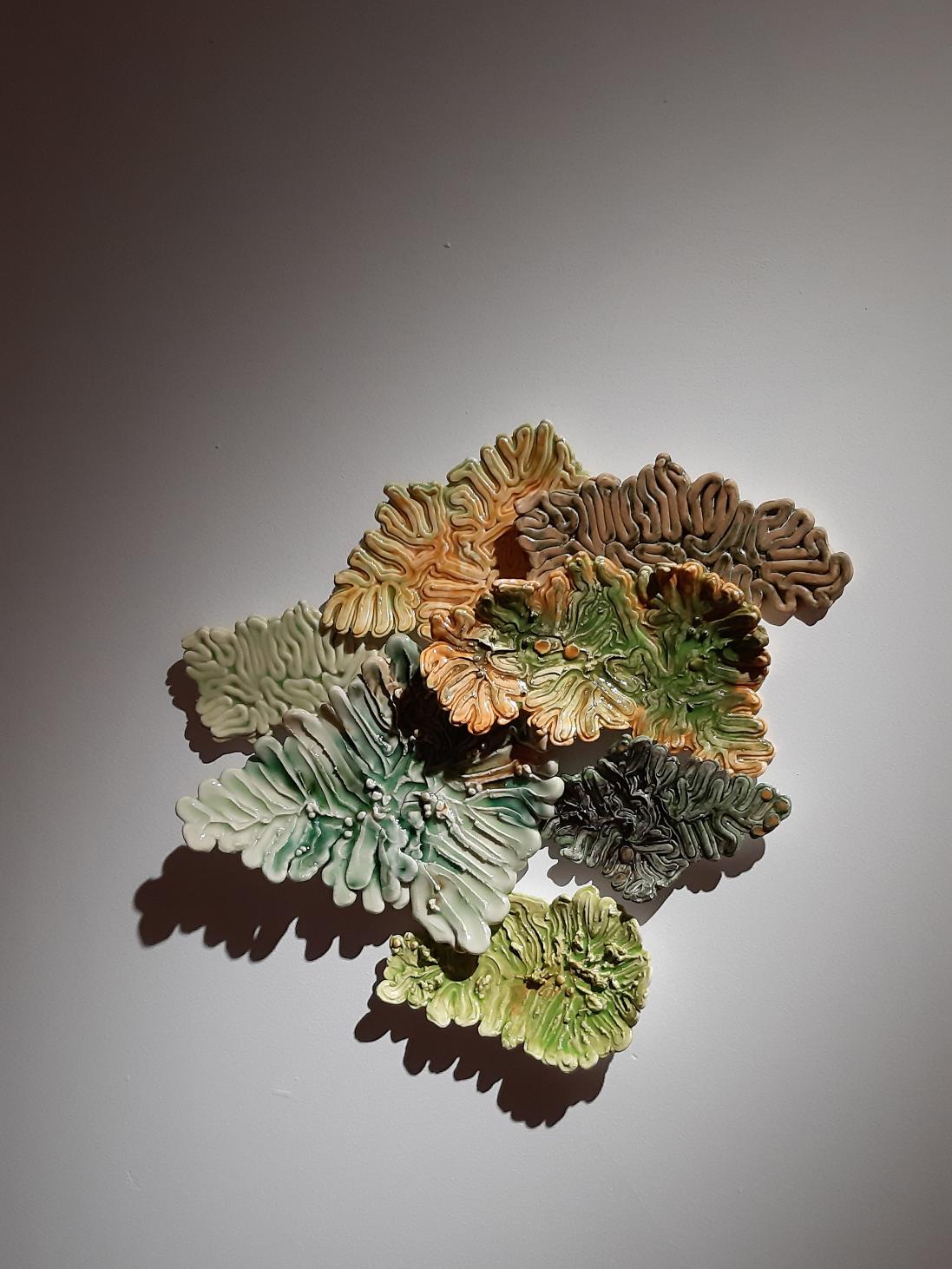
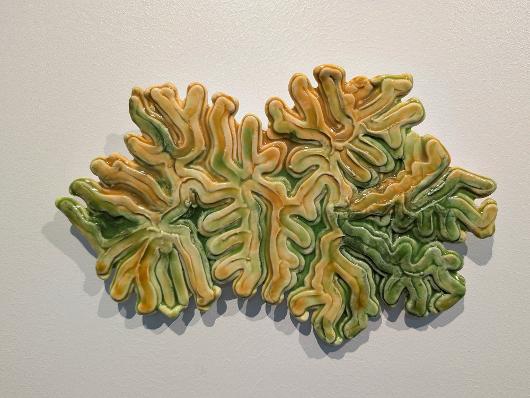
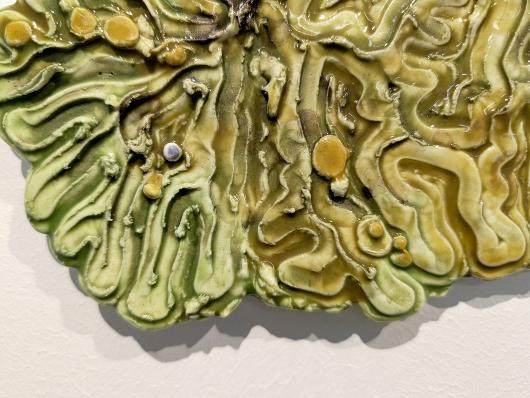
Material: 3D-printed glazed porcelain
The installation draws inspiration from the underwater bladderwrack forests of the Baltic Sea, among the most productive habitats in the region. They sustain countless species and store carbon, helping to slow climate change.
Using 3D modelling, I have studied the organic forms of nature. Natural growth algorithms are increasingly used in design, architecture and urban planning. Coral ecosystems, for example, allocate resources efficiently, distributing nutrients evenly to every polyp. By 3D printing porcelain clay with growth algorithms, I have created forms that evoke a bladderwrack forest. I believe we need similar principles to guide us towards a fairer distribution of the Earth’s finite resources.
Loss of Small Details
Year: 2019
Exhibition: solo exhibition, Kunsthalle Turku, Finland
The starting point for Loss of Small Details was a 3D scanning process carried out in a 100-year-old house. I began scanning my relative’s old summer home somewhat spontaneously, and the results were far from perfect. The rooms and objects appeared only in fragments, and the 3D models were riddled with gaps.
Despite this, or perhaps because of it, I found the incomplete scans an ideal foundation for my work. I felt no urge to correct their imperfections. The glitches and omissions produced by new technology became a metaphor for the fragility and impermanence of life and memory.
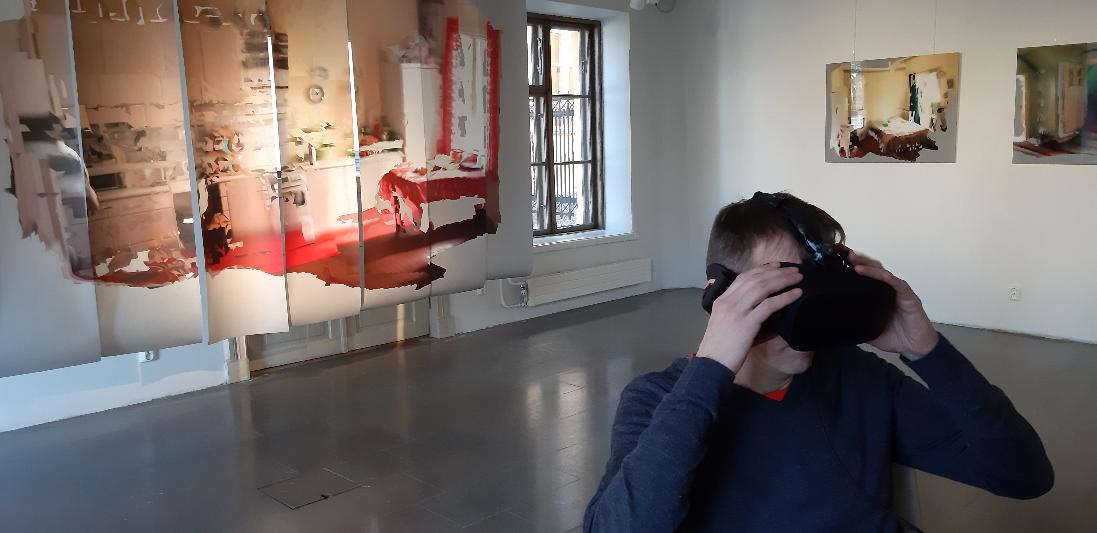
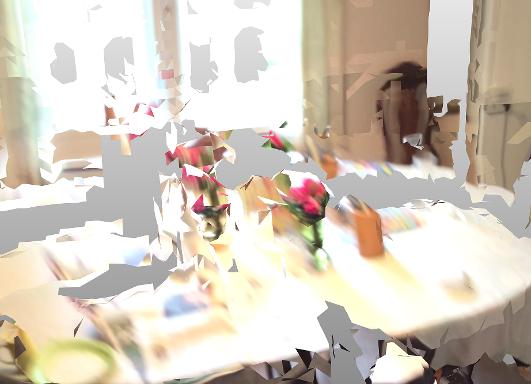
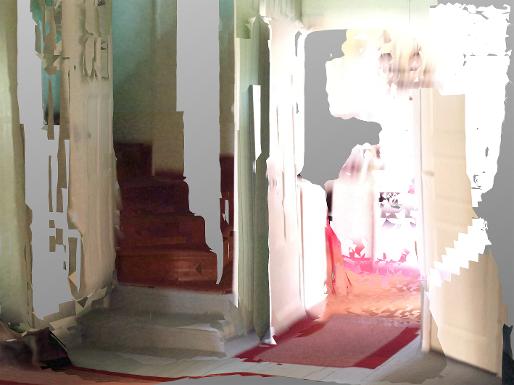
Loss of Small Details, video
Year: 2019
Length: 4 min 28 s
3D scanning, modelling, VR editing, animation and music by the artist
From the 3D models of the scanned house, I built a virtual reality world. The rooms and the soundscape captured in family videos float in space like memories in the mind. The spaces, with their colours, light and sound, appear and disappear again; nothing is permanent.
Interrupted Continuum
Year: 2016
Exhibition: solo exhibition, GalleriaKONE, Hämeenlinna, Finland
Material: 3D-printed PLA and spray-painted aluminiun
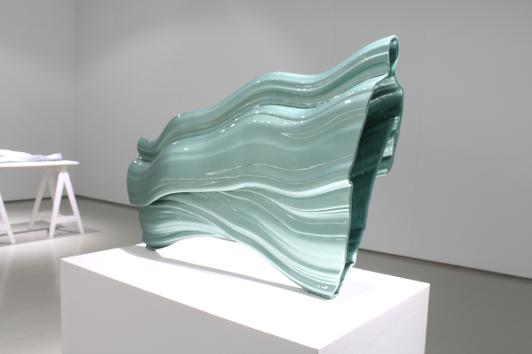
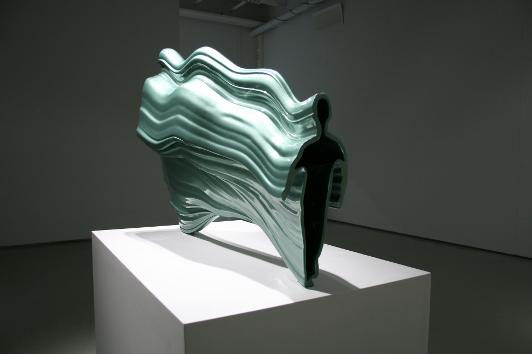
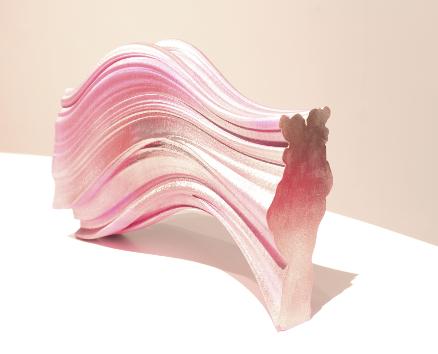
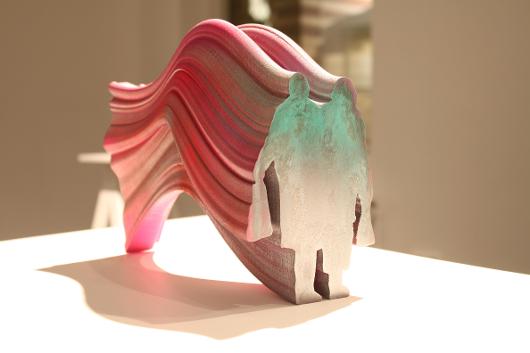
These 3D-printed sculptures record human movement. Silhouette lines change into one another, for example from a child to an adult, and at the same time they draw the outlines of the sculpture. The sculptures are fragments or condensations of time. As the silhouette lines build the forms, breaks, twists and collisions occur, and I call the resulting forms manifestations of an interrupted continuum.
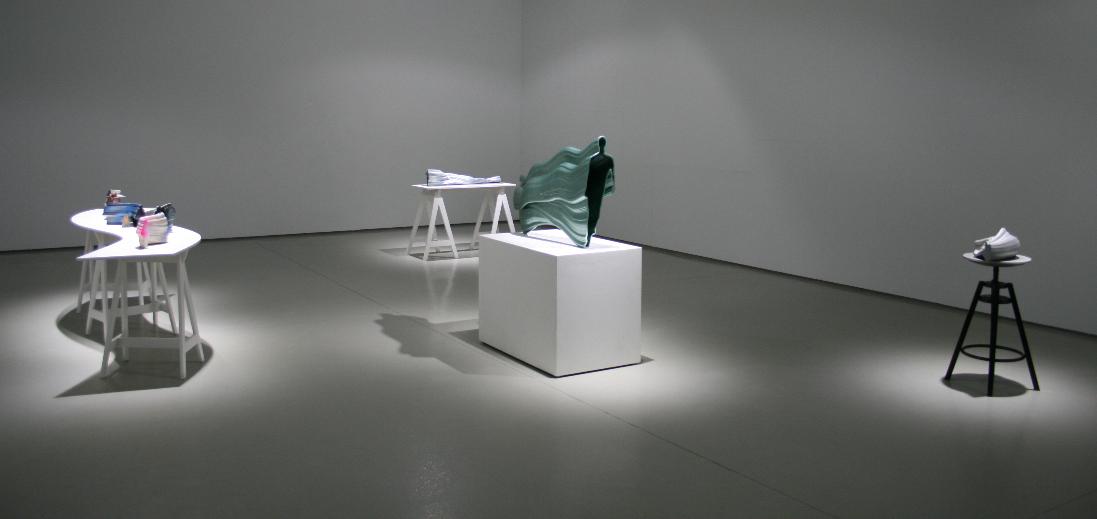
Passage
Year: 2014
Exhibition: solo exhibition, Galleria Sculptor, Helsinki, Finland
Material: 3D-printed PLA and spray-painted aluminium
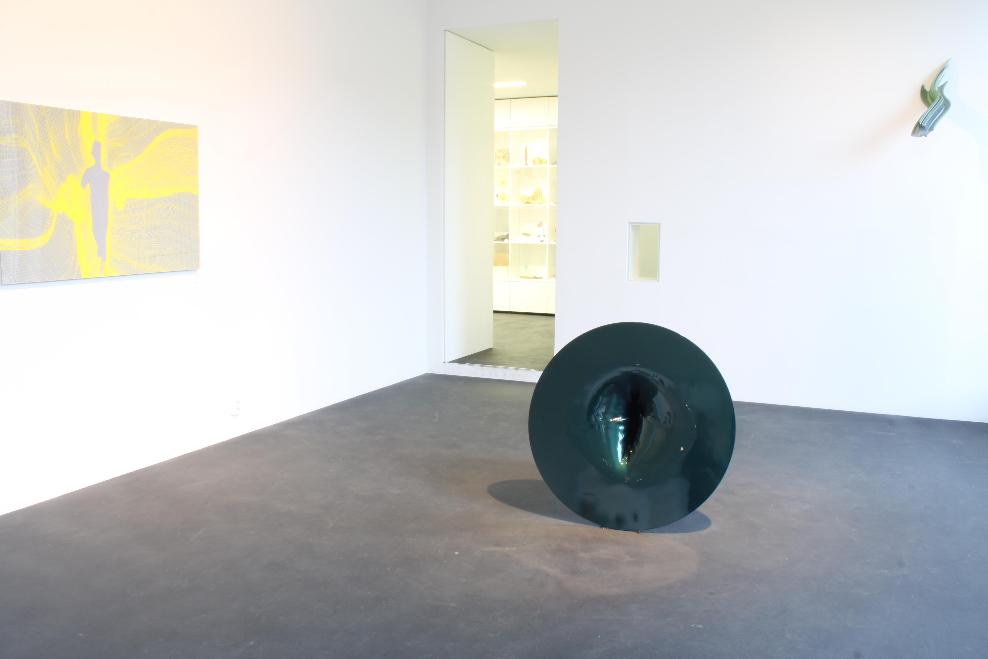
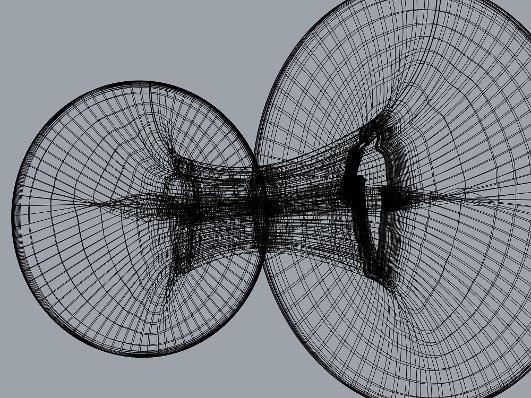
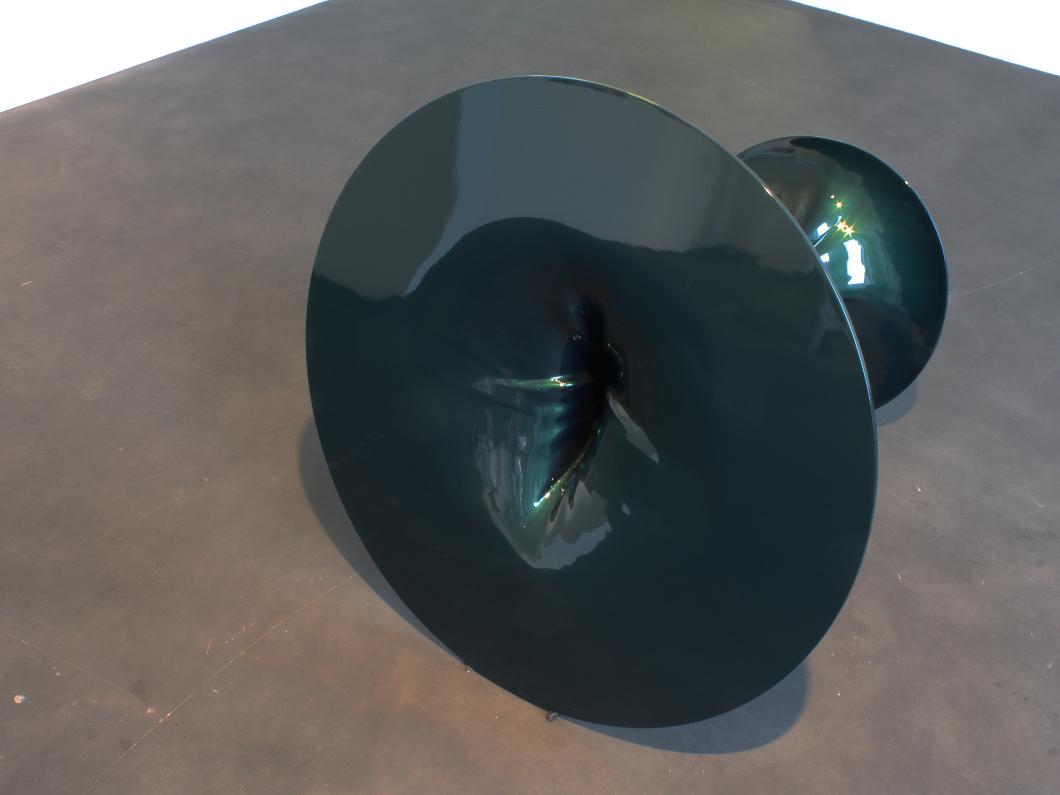
The Passage sculptures were my first works made with 3D modelling and 3D printing. Human silhouettes, a child, a woman, a man, an elderly person, a skeleton change into one another, and their outlines form the sculpture. The starting points were the moving human figure, relationships between people, and our relationship with our surroundings. The sculptures were 3D-printed in PLA and Abyss sculpture was cast in aluminium using the lost-PLA method, then polished and spray-painted.
Mesh
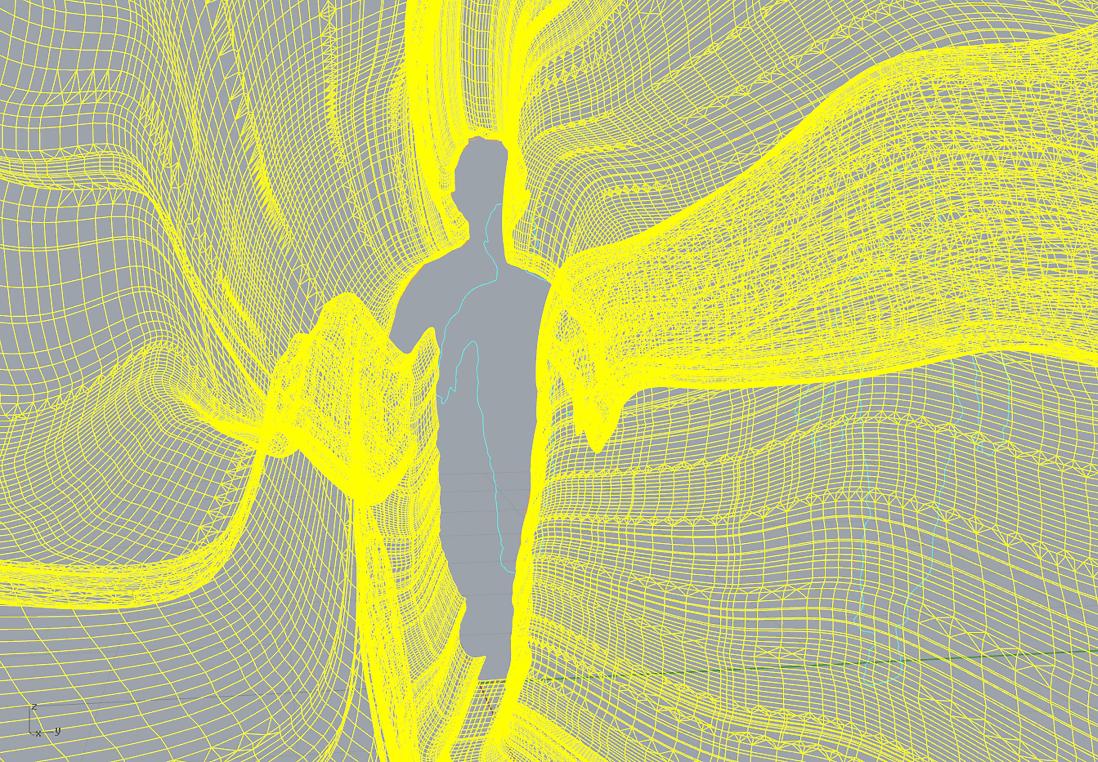
Year: 2014
Digital drawing
Collection: Wihuri Art Collection, Rovaniemi Art Museum
Abyss
Year: 2014
Material: Cast aluminium, polished and spray-painted
Collection: Wihuri Art Collection, Rovaniemi Art Museum
3daddict Oy · Business ID 3139088-1 · Instagram